How Driver Tee Height Affects Launch Angle and Driving Distance
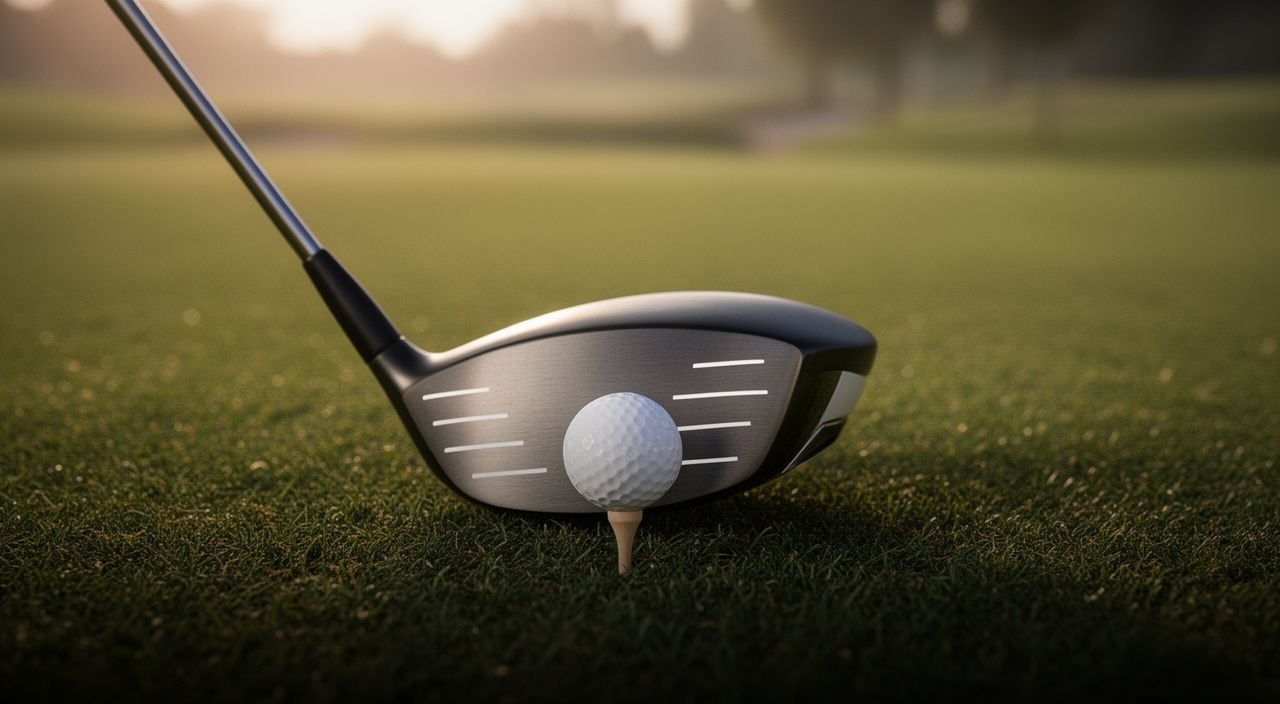
A small adjustment in tee height directly dictates launch angle, spin rate, and overall driving distance, making it one of the most critical variables in the golf setup. While a 20-year-old GOLF Magazine experiment first highlighted the distance gains of optimal tee height, modern launch monitor data confirms that finding the exact sweet spot prevents weak pop-ups and maximizes carry. Understanding the physics of the clubface and ball interaction allows golfers of all skill levels to stop guessing and start setting up for success on every par 4 and par 5.
How Does GolfTEC Launch Monitor Data Define the Ideal Driver Setup?
When analyzing the mechanics of the golf swing, precise metrics separate a professional-level drive from an amateur mishit. According to GolfTEC, optimizing your setup with a higher tee resulted in a launch angle of 15, backspin around 3,000, a higher descent angle, and a max height of 37 yards. These specific numbers represent the ideal window for maximizing carry distance while ensuring the ball stops quickly on the green.
The physics behind these numbers rely heavily on the gear effect. Modern drivers are engineered to perform best when struck slightly above the center of the face. As VoiceCaddie explains, striking high on the face reduces spin and launches the ball higher, which is the exact formula needed for a low-spinning bomb down the fairway. This interaction directly influences smash factor, ensuring that the energy from your clubhead speed is efficiently transferred into ball speed.
Your golf tee height controls where the clubface meets the ball. This single variable determines whether your drive launches with maximum carry or loses distance due to excess spin. — VoiceCaddie
Achieving this optimal strike location requires more than just a casual tee push. It demands an intentional setup that accounts for the unique dimensions of your driver head and your natural angle of attack.
What Are the Bobby Walia Golf Classifications for Low, Standard, and High Tees?
To find the correct setup, it helps to understand the standard classifications used by instructors. Bobby Walia Golf breaks down tee heights into three distinct categories based on the relationship between the ball and the clubhead:
- Low Tee Height: This setup "positions the centre of the golf ball around the clubface’s bottom half". When utilizing this height, you must push the tee in deep, leaving only a small portion above ground. The ball sits roughly at the same level as the lower half of the clubface.
- Standard Tee Height: Often referred to as regular tee height, this describes a ball with its "equator at the same height as the club’s crown".
- High Tee Height: A ball positioned high on a tee refers to a ball that has its centre higher than the top of the crown of the clubface. This requires leaving more of the tee exposed above the turf.
Each classification carries specific consequences for ball flight. Teeing the ball too low often leads to hitting below the ball’s equator, creating extra backspin and a lower trajectory. The result is a shot that falls short and lacks roll. Conversely, teeing the ball too high can cause topped shots, sky balls, or inconsistent contact. Finding the middle ground is essential for clean contact.
Why Does a Higher Tee Height Worsen a Slice for Right-Handed Players?
While a higher tee generally promotes a higher launch and more distance, it is not a universal cure for all swing faults. GolfTEC notes that "teeing the ball higher can help increase your angle of attack for a higher launch and more distance, but it may also cause a leftward club path and worsen a slice for right-handed players".
This happens because a higher tee encourages a more upward strike, which can alter the low-point of the swing and shift the club’s path. For a right-handed golfer already battling a slice, this leftward shift in path can exacerbate the side spin, leading to shots that curve further right than intended. Players dealing with a slice may need to adjust their aim or stance to compensate for this path shift if they choose to tee the ball higher.
On the other end of the spectrum, a lower tee can lower ball flight and launch for more control but might increase spin due to lower contact on the clubface. Golfers must test both heights on the range to compare the results. Changing tee height affects launch angle, carry distance, roll, and max height, so players should adjust based on their desired shot shape and their natural swing tendencies.
How Can Amateurs Use USGA Equipment Research to Build a Consistent Setup?
The relationship between tee height and distance is so significant that it is closely monitored by the sport’s governing bodies. The USGA has extensively studied the effects of tee height on drive distance, even testing a 44-in length claw-back club to mimic what manufacturers might produce as a driving club should allowable tee heights be drastically reduced. This research underscores how deeply tee height influences the fundamental physics of the game.
For the amateur practitioner, mastering tee height is particularly crucial when transitioning to modern 460cc driver heads. Unlike older, smaller clubheads where the sweet spot was more forgiving, today’s massive driver crowns require precise vertical strike locations to activate the gear effect. If an amateur uses a standard tee height with a new high-lofted driver, they may inadvertently strike the ball below the equator, negating the engineering benefits of the clubface. Adjusting the tee so the ball sits slightly above the crown ensures the modern driver performs as the manufacturer intended.
To translate this understanding into on-course success, consistency is key. GolfTEC advises players to use tee markings to ensure consistency, allowing golfers to replicate their optimal launch conditions hole after hole. A simple practical application is the "Crown Check Drill": before teeing off, address the ball with your driver and observe where the equator of the ball sits relative to the crown of the clubhead. If the ball is below the crown, push the tee in slightly. If it is significantly above the crown, lower it. This visual checkpoint takes seconds and ensures your setup matches your swing mechanics. By combining a 15-degree launch angle with 3,000 RPMs of backspin, golfers can reliably find the fairway while maximizing their carry distance on every tee box.
Related articles