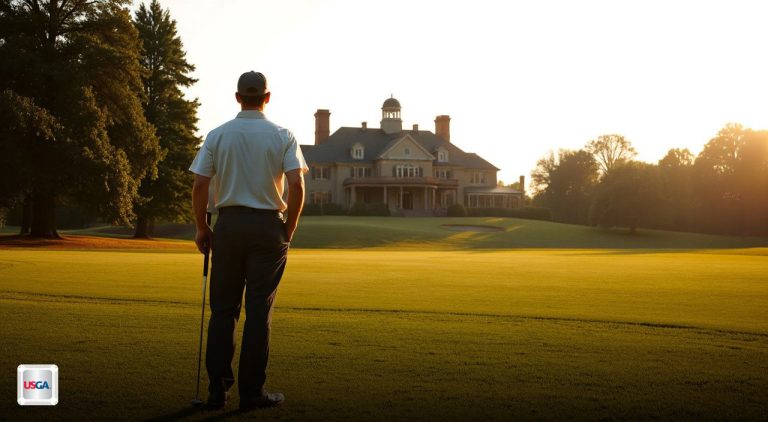
Merion Golf Club Joins Pinehurst and Oakmont as Fourth U.S. Open Anchor Site

The United States Golf Association (USGA) officially designated Merion Golf Club as its fourth U.S. Open anchor site on Thursday, securing the historic Ardmore, Pennsylvania, venue for multiple championships over the next 25 years. Merion will host the U.S. Open in 2030, 2040, and 2050, alongside the U.S. Women’s Open in 2034 and 2046. This long-term commitment integrates Merion into a strategic roster of iconic courses, ensuring the national championship returns to its most celebrated venues on a predictable, recurring basis.
What the Merion Anchor Site Designation Means for Future U.S. Opens
The USGA introduced the anchor site concept to create a modern version of a national championship rota, moving away from a purely rotating model to one that guarantees frequent returns to the game’s most historic layouts. Pinehurst Resort & Country Club became the first anchor site in 2020, followed by Oakmont Country Club in 2021 and Pebble Beach Golf Links in 2022. Merion now becomes the fourth member of this elite group, joining a schedule that is already locked in through the middle of the century.
The designation formalizes a deep, ongoing partnership between the governing body and the host club. “The anchor site designation is about more than just semantics,” John Bodenhamer, the USGA’s chief championships officer, explained in a press release. “It represents a shared commitment between the USGA and Merion to plan further in advance, make strategic investments and continually elevate the championship experience.”
By securing these dates decades in advance, the USGA and the host clubs can collaborate on long-term infrastructure improvements, environmental sustainability initiatives, and community engagement programs. This stability allows both organizations to allocate resources efficiently, ensuring that when the world’s best players arrive, the venue is prepared to provide the ultimate test of golf.
How Merion Golf Club’s History Shapes the USGA’s Long-Term Strategy
Merion’s inclusion in the anchor site program is deeply rooted in its unparalleled championship pedigree. According to Golf Digest, the club has hosted a record 20 USGA championships, more than any other venue in the country. Its East Course has been the site of some of the most iconic moments in the sport’s history, including Bobby Jones completing the grand slam at the 1930 U.S. Amateur and Ben Hogan’s legendary 1-iron approach to the 72nd hole at the 1950 U.S. Open.
More recently, the course tested the world’s best professionals when Justin Rose captured his lone major championship at the 2013 U.S. Open. The venue also remains a vital proving ground for the game’s top amateurs, having hosted the 2026 U.S. Amateur just two months prior to this anchor site announcement, where Jack Whaley claimed the title.
Merion has long been one of the defining venues in championship golf. Its history, architecture and ability to consistently identify the game’s greatest champions make it a place where every player dreams of winning. — John Bodenhamer, USGA Chief Championships Officer
Despite its rich history, Merion’s small footprint means it cannot accommodate the massive spectator infrastructure seen at modern mega-courses, resulting in lower direct revenue for the USGA. Furthermore, the East Course’s modest length led some to believe it might be phased out as professional driving distances increased. The USGA’s decision to grant anchor site status is a clear statement that architectural integrity, historical prestige, and the ability to test a complete game outweigh the financial benefits of a larger venue.
Why the USGA is Booking U.S. Open Venues Through 2051
Booking a major championship 25 years into the future might seem unusual, but the USGA insists there is rigorous tactical thinking behind the timeline. Speaking during a preview event earlier this year, Bodenhamer acknowledged the perceived absurdity of the long-range planning, noting, “I get this question a lot: ‘“Why in the heck are you going out so far with the U.S. Open? I’m not going to be alive in 2051”.’”
However, the consistency of host venues opens the door to boundless opportunities beyond creating a stronger identity for the championship. As Front Office Sports reported, the USGA is leveraging these long-term agreements to drive far-reaching sustainability effects for the resource-intensive sport. By knowing exactly when a course will host the Open, clubs can implement gradual, environmentally sound agronomic practices and infrastructure upgrades without the pressure of a rushed, short-term renovation cycle.
This long-term strategy has effectively locked up the U.S. Open calendar for the next two and a half decades. Based on the USGA’s current schedule, the championship will cycle through a specific group of historic clubs, ensuring a high standard of play and course conditioning.
| Year | Venue | Location |
|---|---|---|
| 2026 | Shinnecock Hills Golf Club | Southampton, New York |
| 2027 | Pebble Beach Golf Links | Pebble Beach, California |
| 2028 | Winged Foot Golf Club | Mamaroneck, New York |
| 2029 | Pinehurst No. 2 | Pinehurst, North Carolina |
| 2030 | Merion Golf Club | Ardmore, Pennsylvania |
| 2032 | Pebble Beach Golf Links | Pebble Beach, California |
| 2034 | Oakland Hills Country Club | Michigan |
| 2035 | Pinehurst No. 2 | Pinehurst, North Carolina |
| 2036 | Shinnecock Hills Golf Club | Southampton, New York |
| 2037 | Pebble Beach Golf Links | Pebble Beach, California |
| 2040 | Merion Golf Club | Ardmore, Pennsylvania |
| 2041 | Pinehurst No. 2 | Pinehurst, North Carolina |
| 2044 | Pebble Beach Golf Links | Pebble Beach, California |
| 2047 | Pinehurst No. 2 | Pinehurst, North Carolina |
| 2050 | Merion Golf Club | Ardmore, Pennsylvania |
| 2051 | Oakland Hills Country Club | Michigan |
Data sourced from the USGA’s future site locations and official announcements.
What Amateur Golfers Can Learn from Merion’s Championship Setup
While the USGA’s long-term scheduling is fascinating from a business and historical perspective, the setup at Merion offers a highly practical lesson for recreational golfers, juniors, and amateur competitors. In an era where players often obsess over maximizing driving distance, Merion’s East Course stands as a testament to the enduring value of precision, course management, and short-game proficiency.
Even when stretched to its absolute limits for a U.S. Open, Merion plays significantly shorter than many modern championship venues. The USGA’s willingness to host its premier events on a course that does not require 320-yard drives to be competitive sends a clear message: golf is not just a power game.
For the amateur golfer looking to lower their handicap, Merion’s philosophy provides a strategic blueprint:
- Prioritize Accuracy Over Distance: Hitting the fairway and finding the correct side of the green is often more valuable than adding 20 yards to your drive. A well-placed 250-yard tee shot leaves a much simpler approach than a 300-yard drive in the heavy rough.
- Master the Recovery Game: Merion’s small, undulating greens and tight collection areas demand excellent touch around the greens. Amateurs should dedicate a significant portion of their practice time to chipping, pitching, and putting from various lies.
- Play to Your Strengths: Course management is about knowing your true distances and avoiding hero shots. If a hazard guards the left side of the green and you tend to fade the ball, aim for the center or right side.
The USGA’s commitment to venues like Merion ensures that the ultimate test of golf will continue to reward a diverse set of skills. By studying how the professionals navigate these historic, strategic layouts, everyday golfers can learn to play smarter, manage their expectations, and ultimately enjoy the game more by focusing on strategy rather than sheer power.