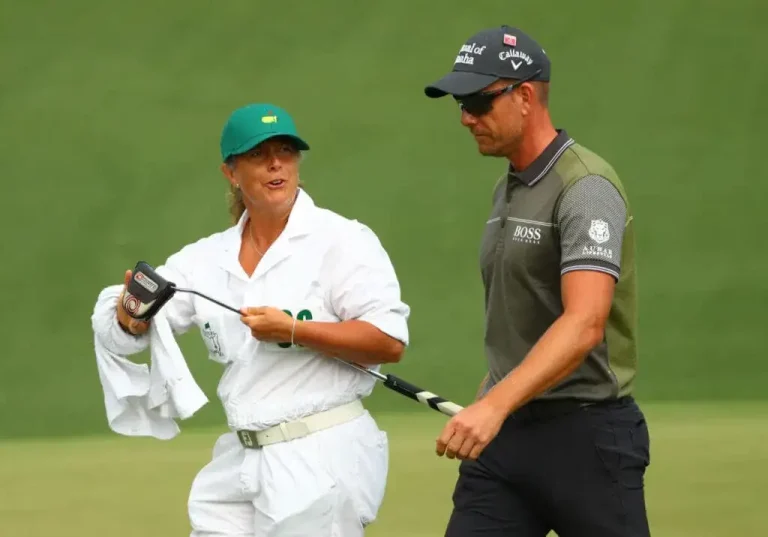
Annika Sörenstam: Career Records, Major Wins, and Lasting Legacy

Annika Sörenstam is a Swedish-American professional golfer who won 72 LPGA tournaments and 10 major championships, establishing herself as the most dominant female golfer of her generation. This guide details her early life, exact professional records, defining victories, and enduring impact on the sport.
How did Annika Sörenstam start playing golf?
Annika Sörenstam began playing golf at age twelve in Bro, Sweden, after transitioning from junior tennis. She developed her skills by hitting balls in her basement during harsh winters, eventually earning a scholarship to the University of Arizona where she won the 1991 NCAA individual championship.
!A pristine golf course fairway lined with pine trees at sunrise
Born on October 9, 1970, Sörenstam grew up in a highly sports-oriented family. While she initially competed in tennis, reaching the 12th rank in Swedish junior standings, she shifted her focus to golf after growing frustrated with the racket sport. Her younger sister, Charlotta, also followed a professional golf path, creating a competitive household environment that pushed both athletes to excel.
Her amateur career peaked at the University of Arizona. In 1991, she became the first freshman and the first international player to capture the NCAA Division I individual title. She also earned Co-National Player of the Year honors and was a two-time All-American before turning professional in 1992, quickly transitioning to the Ladies European Tour and the LPGA Tour.
What are Annika Sörenstam’s exact professional records and major wins?

AI illustration · Golf Daily RoundUp
Annika Sörenstam accumulated 72 official LPGA Tour victories and 10 major championships during her career, alongside many more wins on the Ladies European Tour and other tours around the world. She retired as the LPGA’s all-time money leader with over $22 million in official earnings.
Her dominance on the tour is reflected in her record-breaking award count. Sörenstam holds the record for the most Rolex LPGA Player of the Year awards, earning the honor eight times between 1995 and 2005. She also secured the Vare Trophy for the lowest season scoring average on six separate occasions, proving her consistency across all facets of the game.
Below is a breakdown of her most significant statistical achievements during her 15-year Hall of Fame career:
- Total Professional Wins: 90+ (72 LPGA, 10 Majors, 18 International)
- LPGA Player of the Year: 8 times (1995, 1997, 1998, 2001, 2002, 2003, 2004, 2005)
- Vare Trophy (Lowest Scoring Average): 6 times
- Lowest Scoring Average (Season): 68.69
- Career Earnings: Over $22.5 million
She was inducted into the World Golf Hall of Fame in 2003, completing the career grand slam that same year by winning each of the four recognized majors during her prime. Her statistical footprint remains the benchmark against which all modern LPGA professionals are measured.
Which defining moments and major victories shaped her career?

AI illustration · Golf Daily RoundUp
Sörenstam’s career is defined by historic milestones, including shooting a 59 in 2001, competing in a PGA Tour event in 2003, and capturing three U.S. Women’s Opens with memorable final-round performances and playoffs that cemented her status as a major championship performer.
Her first LPGA Tour victory came at the 1995 U.S. Women’s Open at The Broadmoor. According to the USGA, she rallied from five strokes behind with a closing 68 to win her first major. She defended her title in 1996 at Pine Needles with a six-stroke win that showcased her elite driving accuracy.
!A set of golf clubs resting on a lush green fairway
In 2001, Sörenstam made history at the Standard Register PING tournament. She became the first woman to shoot 59 in an official LPGA event, carding it at the par-72 Moon Valley Country Club in Phoenix. This achievement earned her the enduring nickname “Ms. 59” and highlighted her exceptional iron play and putting under pressure.
The 2003 season brought unprecedented visibility. She competed in the Bank of America Colonial, becoming the first woman to play in a PGA Tour event since Babe Didrikson Zaharias in 1945. Later that year, she secured her career grand slam. Her third U.S. Women’s Open victory arrived in 2006 at Newport Country Club, where she won an 18-hole Monday playoff over Pat Hurst.
She played her last U.S. Women’s Open as a full-time professional at Interlachen in 2008, signing off by holing her approach on the final hole for an eagle. Looking back on that week, she noted, "I thought at that time, I’ve played my last USGA competition… The USGA has a special place in my heart".
How did her playing style and preparation change the game?
AI illustration · Golf Daily RoundUp
Sörenstam fundamentally altered women’s golf by introducing rigorous physical fitness, meticulous course management, and an uncompromising competitive standard that elevated the sport’s professional baseline. Her data-driven approach and physical conditioning set a new precedent for future generations of amateur and professional golfers.
Before Sörenstam’s era, the LPGA was largely characterized by shot-making and feel. She introduced a level of athletic preparation previously unseen in the women’s game. By treating golf with the same physical and mental rigor as traditional men’s sports, she forced the entire tour to adapt to a higher standard of fitness, practice volume, and mental resilience.
Her strategic approach to course management was equally influential. Sörenstam relied heavily on statistical analysis and precise yardage books, optimizing her club selection and risk management on every hole. This analytical mindset mirrored the data-driven evolution occurring in men’s golf during the same period, proving that meticulous preparation yields consistent scoring advantages.
For amateur golfers, her legacy offers a clear blueprint: physical fitness directly supports swing mechanics, and rigorous practice routines build the muscle memory required for high-pressure tournament play. Her commitment to the fundamentals of driving accuracy and iron precision remains a core coaching principle taught at academies worldwide today.
What is Annika Sörenstam’s legacy and post-career impact?
Annika Sörenstam’s legacy extends beyond her playing record through the ANNIKA Foundation, global course design, and her continued leadership in team competitions like the Solheim Cup. She remains an influential figure in golf, recognized with the Presidential Medal of Freedom and membership at Augusta National.
Stepping away from full-time competition after the 2008 season, she built a comprehensive business brand. The ANNIKA Foundation, established in 2007, provides golf opportunities at the junior, collegiate, and professional levels while promoting healthy, active lifestyles. Her business ventures include the ANNIKA Academy, course design, and high-end apparel collections, making her the "first and only female golfer to create a successful brand of businesses".
Her involvement in team golf remains highly active. She represented Europe in eight Solheim Cups as a player, later served as a vice-captain, and captained the European team in 2017. In 2021, she led the European Junior Solheim Cup team to a historic comeback victory on U.S. soil.
Sörenstam also made a successful return to competitive golf in 2021. After playing the Gainbridge LPGA, her first LPGA event in more than 12 years, she captured the U.S. Senior Women’s Open by eight shots, securing her fourth USGA title. Her contributions to the game have "changed the way women’s golf was played, viewed, and covered", ensuring her influence will be felt for decades to come.
Key Takeaways for Amateur Golfers
To apply Sörenstam’s championship principles to your own game, focus on these actionable steps:
- Prioritize Fitness: Incorporate core and flexibility training to maintain swing consistency over 72 holes.
- Master Your Distances: Use a launch monitor or track your carry distances meticulously to improve iron precision and course management.
- Emulate Her Routine: Develop a consistent pre-shot routine that you execute identically, whether on the first tee or the 18th green.
- Practice with Purpose: Dedicate practice time to specific weaknesses rather than just hitting balls aimlessly on the range.
Frequently asked questions
Who is the greatest female golfer of all time?
Annika Sörenstam is widely regarded as the greatest female golfer of all time based on her statistical dominance, including 72 LPGA victories, 10 major championships, and a record eight Player of the Year awards. Her impact on the sport’s global growth and professional standards solidifies this consensus.
How good was Annika Sörenstam?
Annika Sörenstam was exceptionally dominant, winning over 90 tournaments worldwide and retiring as the LPGA’s all-time money leader with over $22 million in earnings. She recorded the lowest single-season scoring average in tour history at 68.69 and remains the only woman to shoot a 59 in competition.
Did Annika Sörenstam ever play on the PGA Tour?
Annika Sörenstam competed in one official PGA Tour event, the 2003 Bank of America Colonial in Fort Worth, Texas. She became the first woman to play in a PGA Tour event since Babe Didrikson Zaharias in 1945, though she did not make the cut.
Related articles