Most Golf Majors by Country: A Data-Driven Guide to Men’s Major Winners by Nation
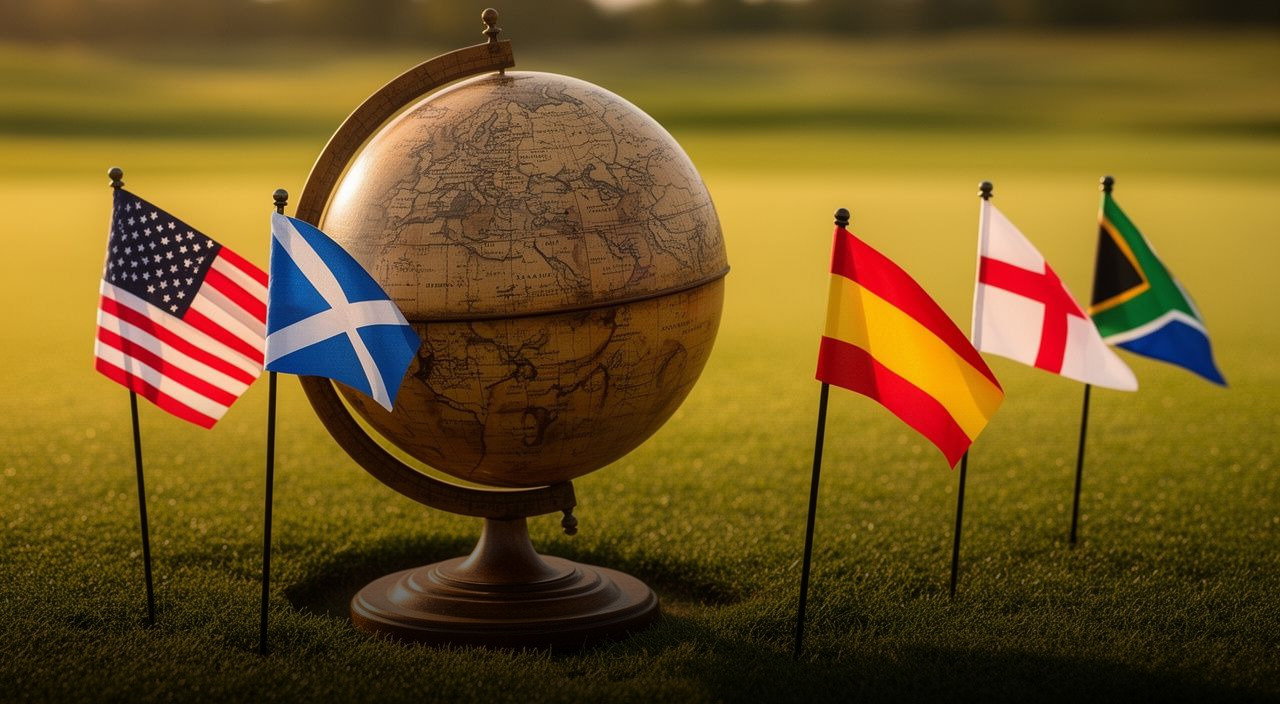
The United States leads the all-time rankings for the most golf majors by country, followed by Scotland and England. This guide breaks down the historical and modern distribution of men’s major championship wins across the globe, identifying the leading nations and the players who built their legacies. We will explore the official data, examine the historical context of these victories, and highlight the active competitors shaping the current landscape based on records through mid-2026.
What Is the Overall Count of Men’s Major Championships by Country?
To understand the global distribution of major championships, we must first look at the total volume of tournaments played. In men’s golf major championship history, there have been 487 majors played, comprising 90 Masters Tournaments, 126 U.S. Opens, 153 Open Championships, and 108 PGA Championships. According to Golf News Net, “a grand total of 20 countries have been able to claim a male major champion of the 229 men to win a major championship”.
The data reflects a highly concentrated field of success, with a few nations accounting for the vast majority of the trophies. The table below ranks the leading countries by total major victories, the number of individual champions they have produced, and their most successful players.
| Country | Total Majors | Total Champions | Leading Player(s) |
|---|---|---|---|
| United States | 280 | 133 | Jack Nicklaus (18), Tiger Woods (15) |
| Scotland | 55 | 31 | Willie Anderson (4), Tom Morris Sr. (4) |
| England | 37 | 21 | Nick Faldo (6), John Henry Taylor (5) |
| Australia | 18 | 12 | Peter Thomson (5), Greg Norman (2) |
| Argentina | 3 | 2 | Ángel Cabrera (2), Roberto De Vicenzo (1) |
| Canada | 1 | 1 | Mike Weir (1) |
Note: Data reflects official championship records through mid-2026. Some historical tallies place the U.S. total at 291, but 280 is used here to align with the comprehensive player-count breakdown provided by Golf News Net.
How Do the United States and Scotland Dominate the Major Championships?
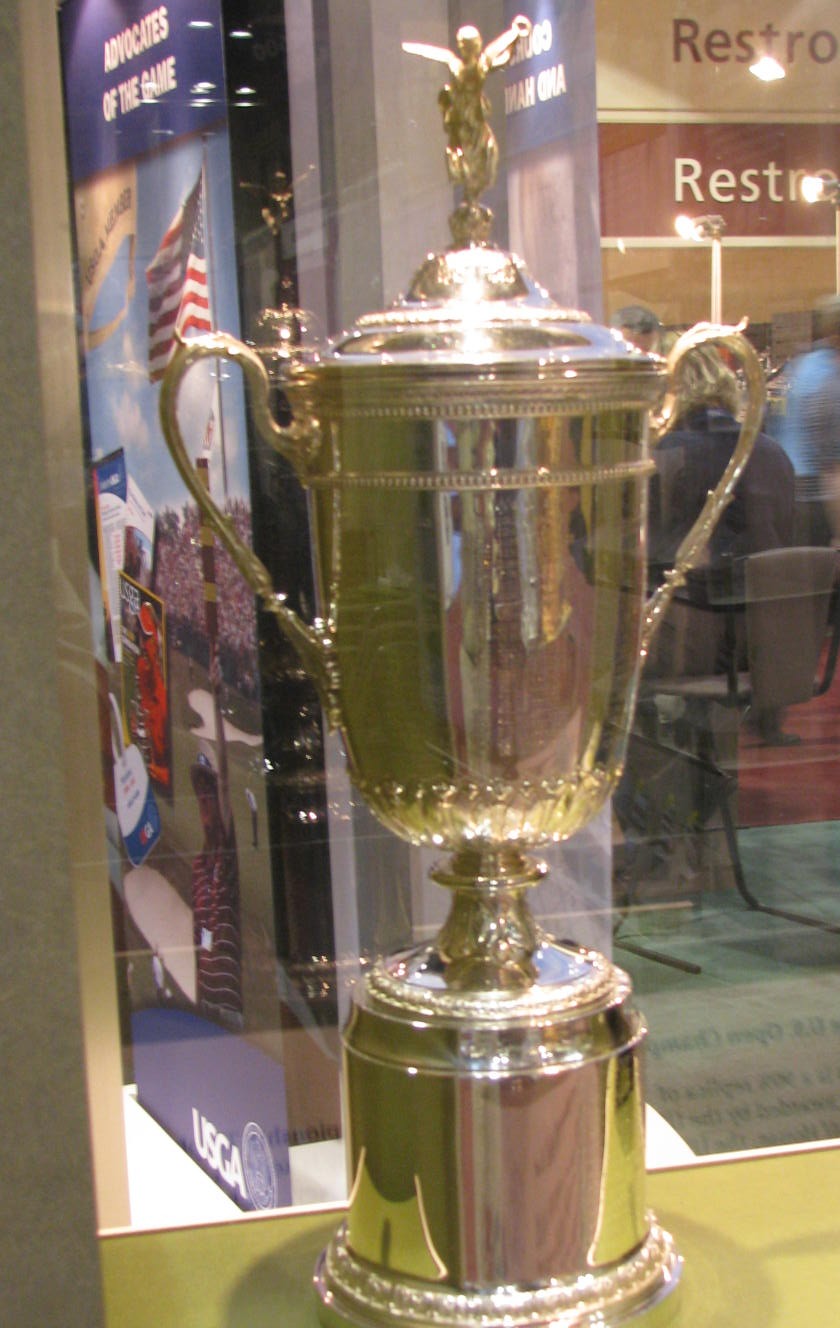
Photo of a 90% replica of the U.S. Open trophy: “US Open Trophy at the 2008 PGA Golf Show” by Dan Perry, cropped, CC BY 2.0, via Wikimedia Commons
The United States towers over the global golf landscape. American men have won the overwhelming majority of the majors, a dominance driven by the sheer depth of their professional infrastructure and the location of three of the four major championships. According to Mappr, “the USA has claimed 90 of the U.S. Opens, 89 PGA Championships and 64 Masters titles ever played”. This geographic advantage, combined with a massive domestic talent pool, ensures that American players consistently peak for the events held on home soil.
Scotland, the spiritual birthplace of the game, ranks second all-time but presents a fascinating historical paradox. The home of golf boasts 55 combined majors, but its success is heavily skewed toward the early eras of the sport. Mappr notes that “52 of those came before the Second World War”. Since the mid-20th century, Scottish major success has been incredibly rare, with only three major victories recorded in the modern era, secured by Sandy Lyle and Paul Lawrie. This highlights a significant shift in the game’s center of gravity from the British Isles to North America over the last century.
Which Players Lead the All-Time Major Wins for Their Nations?
The national totals are built upon the extraordinary achievements of individual golfers who defined their eras. Examining the leading players for each country provides a clear picture of how these nations accumulated their major championships.
- United States: Jack Nicklaus holds the all-time record with 18 major victories, a numerical association that remains the greatest achievement in the sport. Tiger Woods follows with 15 majors, including his most recent victory at the 2019 Masters.
- England: England’s 37 majors are anchored by Sir Nick Faldo, who won six major championships, and John Henry Taylor, who claimed five. Jim Barnes and Henry Cotton also contributed significantly with four and three majors, respectively.
- Australia: Australia’s 18 majors are led by Peter Thomson, who won five Open Championships. Greg Norman, David Graham, and modern champions like Jason Day, Adam Scott, and Cameron Smith have each added multiple victories to the national tally.
- Argentina: Argentina has produced three major champions. Ángel Cabrera won two majors (the 2007 U.S. Open and 2009 Masters), while the legendary Roberto De Vicenzo won the 1967 Open Championship.
- Canada: Canada’s sole major championship was won by Mike Weir, who captured the Masters Tournament in 2003, becoming the first Canadian to win a men’s major.
What Does the Distribution of Major Winners Reveal About Golf’s Global Reach?

Augusta National’s 16th hole during the 2015 Masters: “Hole 16 – Redbud” by Ryan Schreiber, CC BY 2.0, via Wikimedia Commons
While the United States and the United Kingdom dominate the aggregate numbers, the diversity of nations that have produced a major champion is a testament to the sport’s global expansion. Only about 21 countries have ever produced a men’s major champion, making it a tiny, exclusive club of winning nations.
The Open Championship, golf’s oldest major, provides the clearest view of this international spread. According to The Open’s official records, there have been 91 Champion Golfers since the inaugural Championship in 1860, hailing from 15 different countries. While the United States leads The Open with 33 victories, the Claret Jug has been lifted by players from Sweden (Henrik Stenson), Italy (Francesco Molinari), Spain (Seve Ballesteros), Zimbabwe (Nick Price), Argentina (Roberto De Vicenzo), and France (Arnaud Massy).
"With The Open originating in Scotland, the spiritual home of golf, it is understandable that the first 29 editions of golf’s original Championship were won by Scottish golfers." — The Open Championship
This historical Scottish monopoly eventually gave way to a truly international event, proving that while the game’s origins are localized, its highest level of competition is now a global endeavor.
How Has the Modern Era Shifted the Geographic Balance of Majors?

Louis Oosthuizen with the Claret Jug, 2010 Open at St Andrews: “Louis Oosthuizen victory” by Marie Guilpin (cropped by Dr. Blofeld), CC BY-SA 2.0, via Wikimedia Commons
The modern era of golf has seen a gradual diversification of major winners, though the traditional powerhouses remain firmly in control. The current landscape is defined by a mix of established veterans and a new generation of global talent.
Northern Ireland’s Rory McIlroy has emerged as the head of the table in the modern game. In 2026, McIlroy won his second consecutive green jacket, becoming just the fourth player in history to repeat at the Masters. This victory brought his major total to six, making him the most successful active player in major championships.
Meanwhile, the United States continues to replenish its ranks. Scottie Scheffler has quickly ascended the all-time list, accumulating four major championships and demonstrating the continued depth of American golf. The geographic balance has shifted slightly to include more consistent winners from Northern Ireland and a broader European base, but the foundational dominance of the United States remains unchallenged in the aggregate data.
What Structural Factors Explain the Concentration of Major Wins?
To fully understand why the most golf majors by country are concentrated in the U.S. and the U.K., we must look beyond player talent and examine the structural realities of the sport. The four major championships are not a rotating global tour; they are anchored to specific regions. The Masters is permanently fixed in Georgia, while the U.S. Open and PGA Championship rotate exclusively within the United States. Only The Open Championship rotates, though it remains strictly within the links courses of the British Isles.
This geographic anchoring creates a distinct competitive advantage for players who reside in and primarily compete within these time zones and course architectures. American players benefit from playing the majority of their regular-season events on the same types of grasses, in the same climatic conditions, and against the same course setups they will face at the U.S. Open and the PGA Championship. Similarly, European players who specialize in links golf have a distinct advantage at The Open. While the player pool is increasingly global, the tournament locations remain fixed, naturally favoring those who spend the majority of their competitive weeks adapting to those specific environments. This structural reality ensures that the nations with the most established domestic tours and the most major championships hosted on their soil will continue to lead the historical rankings.
Frequently Asked Questions
Who has the most majors in golf history?
Jack Nicklaus holds the all-time record with 18 men’s major championship victories. He is followed by Tiger Woods, who has won 15 majors during his career.
How many countries have produced a men’s major champion?
Historically, only about 20 or 21 countries have produced a male major champion. The United States, Scotland, England, South Africa, and Australia account for the overwhelming majority of these victories.
Which country has won the most Open Championships?
The United States has won the most Open Championships, with American golfers claiming 33 victories in the history of the tournament. This is followed by Scotland, whose players dominated the early decades of the event.
Reviewed by Shahid Anwer · Editorial standards