Golf After a Stroke: A Safe Return Guide with Adaptive Techniques and Rules
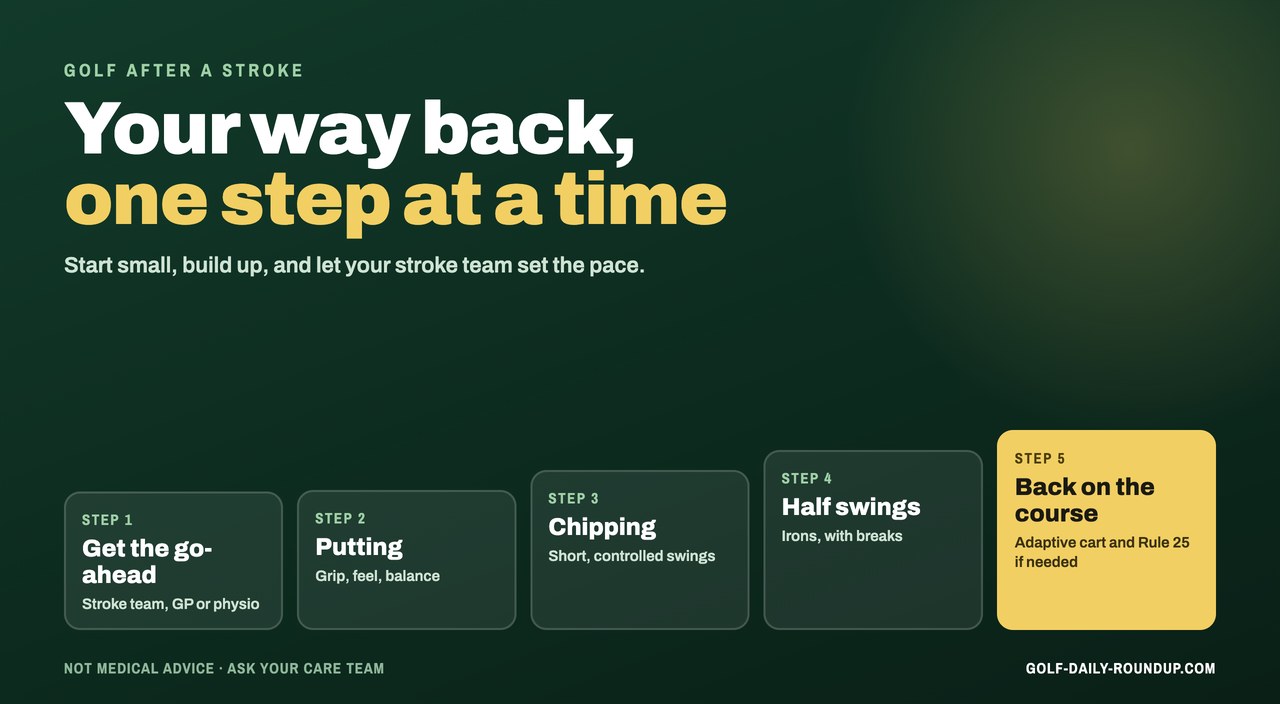
Returning to golf after a stroke is a highly effective way to rebuild physical strength, balance, and social connections, provided it is done safely under medical guidance. This guide covers the physical and mental benefits of the game, how to consult your care team, the 2023 Rule 25 modifications for players with disabilities, and practical steps to ease back onto the course.
Why Golf Is a Powerful Tool for Stroke Recovery
Physical activity plays a critical role in neurological and physical rehabilitation. According to the Golf & Health Project, “physical activity, such as golf, can help stroke survivors to rebuild their lives”. The game naturally encourages walking, which improves cardiovascular health, while the mechanics of the swing and the act of carrying or pulling clubs help restore balance and coordination.
Beyond the physical mechanics, the social environment of a golf course is vital for mental health. Hilary Belshaw, an information and support coordinator at the Stroke Association, notes that the golf course provides an opportunity for survivors to “meet others who are also experiencing” a life after stroke, benefit from exercise, build confidence, and enjoy learning new skills. Isolation is a common challenge post-stroke, and the pace of golf allows for meaningful conversation and community building.
Cognitive benefits are also well-documented. In a small 2015 pilot study of 14 stroke patients, those who took part in ten weeks of golf training improved on a test of mental rotation more than a comparison group, and the researchers concluded that golf training can improve visual imagery ability in stroke patients, even late after the stroke. It is early evidence from a small group rather than proof. Visualizing the flight of the ball and the trajectory of a putt engages neural pathways that support broader cognitive recovery. Furthermore, a qualitative study in the Golf Science Journal found that adapted golf programs for stroke survivors are perceived to promote independence, giving players a renewed sense of control over their physical capabilities.
What You Should Do (and Avoid) Before Swinging a Club

Talk to your stroke team, GP or physiotherapist before you pick up a club. They know which movements are safe for you and how hard to push, and no general guide can replace that. As the Stroke Association puts it, "every stroke is different, so you might not be able to do all these movements. Only do activities that are safe for you", and if you’re not sure, ask your therapist or GP.
When you get the go-ahead, build up slowly. Don’t plan on 18 holes or full drives on your first day back: fatigue is common after a stroke, and the Stroke Association suggests taking extra breaks to avoid fatigue when you return to an activity. Many survivors start with the strength, walking and balance work their physiotherapist sets, then add golf as a practical, sociable way to keep moving.
Stop and get advice if anything feels wrong while you play, such as new dizziness, weakness, unusual tiredness or pain.
How Rule 25 Modifies the Game for Players with Disabilities
Since 2023, the USGA and The R&A have made Rule 25, Modifications for Players with Disabilities, part of the standard Rules of Golf rather than an optional local rule, so the modifications apply in any round or competition. Rule 25 covers four groups: players who are blind, amputees, players who use assistive mobility devices, and players with intellectual disabilities.
For stroke survivors who use a walking aid, a wheelchair or a single-rider cart, the mobility-device section of Rule 25 is the most relevant. Under it:
- Help to get set: before a stroke, you may get physical help from anyone to position yourself or your device.
- An aide as well as a caddie: you may have one aide, who can give advice and lift, drop or replace your ball, alongside a caddie.
- Your device is part of your stance: you can position it and dig it in to stop slipping, but you can’t build a mound to brace it.
- Anchoring: if you can’t swing most clubs without anchoring, you may anchor the club.
- Extra relief: players in wheeled devices get more room when taking some kinds of relief, such as from a red penalty area or an unplayable lie.
Whether you qualify is decided by the committee running the competition. For a casual round, the same modifications show what the game allows.
Adaptive Equipment and Programs to Get You Started
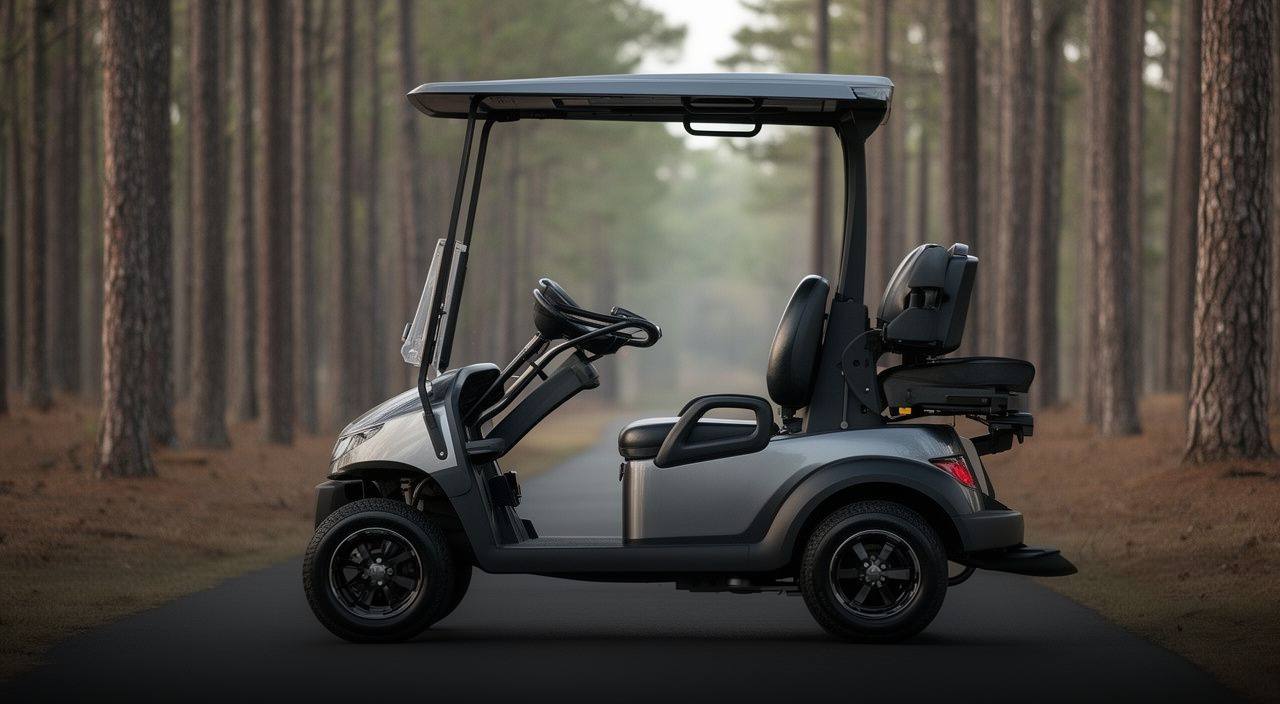
Adapting your equipment to your current strength and range of movement makes the return easier. Single-rider adaptive carts let players with limited mobility get around the course and, on many models, swing from a seated or supported position. Lighter clubs, larger grips and more flexible shafts can reduce strain if grip strength or range of motion is limited. A PGA Professional with adaptive golf experience can help you try options before you buy.
For veterans, PGA HOPE (Helping Our Patriots Everywhere), run by the PGA of America’s charity PGA REACH, offers a six- to eight-week developmental curriculum taught by PGA Professionals trained in adaptive golf, aimed at veterans’ physical, mental, social and emotional well-being.
Stories like John Hanser’s show what’s possible. The 90-year-old Navy veteran returned to golf two years after a massive stroke, helped by his wife’s dedication to his rehabilitation, as Golf.com reported.
How to Progress From Putting to Full Swings
When you are cleared to begin swinging, patience is your most valuable club. Start your return exclusively on the putting green. Putting requires minimal lower-body rotation and allows you to focus on fine motor skills, grip pressure, and hand-eye coordination without the balance demands of a full swing. Spend your first few sessions simply rolling putts from short distances to rebuild your confidence and spatial awareness.
Once you are comfortable on the greens, move to the chipping area. Chipping introduces a slightly longer lever and requires some weight transfer, but it keeps the swing short and controlled. This phase is critical for re-establishing your visual imagery and feel for the clubhead. Focus on making solid contact rather than worrying about distance or direction.
Only after you have mastered short-game stability should you progress to half-swings with irons, and eventually to full swings with a driver. If you experience fatigue or loss of balance, immediately revert to using a single-rider cart or taking seated swings.
Frequently Asked Questions
Can you play golf after a stroke?
Many people do, once their stroke team agrees it’s safe. Every stroke is different, so how soon and how much depends on your recovery. Starting on the putting green and building up gradually is a sensible way to return.
What shouldn’t you do after a stroke when returning to golf?
Don’t start without advice from your stroke team or GP, don’t try a full round or full swings straight away, and don’t play through new dizziness, weakness or unusual tiredness. Take breaks and stop if something feels wrong.
Does golf help stroke recovery?
It can help as part of a wider plan. Golf combines walking, balance and coordination with a social setting, and a small pilot study found improvements in visual imagery after ten weeks of golf training. It supplements the exercises your physiotherapist sets rather than replacing them.
Can I use a cart or have help in competitions?
Yes. Under Rule 25, players who use assistive mobility devices may use them, may have an aide as well as a caddie, and may get physical help to position themselves before a stroke. The competition committee decides who is eligible.
Your First Round Back: A Practical Checklist
Use this checklist before your first visit back to the course:
First Round Back Checklist
- Get the go-ahead: Ask your stroke team, GP or physiotherapist which movements are safe for you.
- Book an adaptive lesson: A PGA Professional with adaptive golf experience can assess your swing and suggest equipment changes.
- Start at the practice area: Spend your first visits on the putting green and chipping area, not a full round.
- Arrange transport and help: Reserve a single-rider cart if you need one, or bring someone to help with balance and clubs.
- Adjust your equipment: Try lighter clubs, larger grips or more flexible shafts to reduce strain.
- Keep it short: Plan short sessions with breaks, and stop if you feel dizzy, weak or unusually tired.
- Know your rules: If you use a mobility device, Rule 25 allows an aide, help to position yourself and your device, and anchoring if you need it.
- Enjoy it: Leave the scorecard behind for now; the goal is rhythm, confidence and time outdoors.
Related articles
Reviewed by Shahid Anwer · Editorial standards