How to Break 90 in Golf: Strategy Changes That Save Strokes Without a New Swing

Breaking 90 requires shifting your focus from swing mechanics to strategic course management, specifically by eliminating penalty strokes and double bogeys. This guide covers the data-driven strategy changes—from tee-shot accuracy to lag putting and wedge control—that help amateur golfers consistently shoot in the 80s without needing a complete swing overhaul.
What Does It Take to Break 90 in Golf?
Breaking 90 means finishing a round at 17-over par or better on a standard par-72 course. According to the National Golf Foundation, the average golfer who keeps an honest scorecard shoots a 94, and less than 40% of players who track their scores regularly break 90.
The math behind "bogey golf" is straightforward. If you bogey every single hole on a par-72 course, you shoot exactly 90. Saving just one par along the way drops your score to 89. The goal for a mid-handicapper is not to make a flurry of birdies, but to turn the double and triple bogeys that wreck a scorecard into plain bogeys.
How Do 89-Shooters Differ from 99-Shooters?

Photo · Golf Daily RoundUp
To understand where to focus your practice, it helps to look at the statistical differences between a typical 99 and an 89. Data compiled by Skillest highlights that lowering your score by 10 strokes is rarely about making more birdies; it is about reducing big errors.
| Statistic | Typical 99 | Typical 89 |
|---|---|---|
| Pars | 3 | 6 |
| Bogeys | 6 | 8 |
| Double Bogeys | 6 | 3 |
| Triple Bogeys | 3 | 1 |
| Greens in Regulation | 3 | 5 |
| Three-Putts | 5 | 2 |
| Penalty Strokes | 3 | 1 |
The four highest-leverage changes for breaking 90 are penalty stroke elimination, double bogey prevention, getting the ball on the green, and lag putting. Eliminating a couple of penalty strokes and reducing three-putts from five to two instantly saves five strokes.
Why Course Management Beats a Swing Overhaul
Many amateurs believe they need a new swing to break 90, but the strokes lost usually come from poor decisions and unnecessary risks.
"A bogey is one bad shot, a double bogey is a bad shot followed by a stupid decision." — Me and My Golf
When you find yourself in the trees or behind a hazard, the ego often demands a "hero shot" through a tiny gap. Playing the safe shot sideways into the fairway guarantees a chance at a bogey, while the hero shot frequently leads to a triple bogey. Playing for bogey instead of par on difficult holes takes the pressure off your swing and keeps your scorecard clean. Developing grit and resiliency—the capacity to recover quickly from difficulties, is essential for this kind of damage control.
While accuracy is paramount for breaking 90, distance still holds significant value. Mark Broadie’s Strokes Gained methodology demonstrates that “distance off the tee is one of the strongest predictors of scoring performance” at every level. However, for the mid-handicapper, a 220-yard drive in the fairway sets up a much easier approach than a 260-yard drive in the rough, where double bogeys are born.
How to Master the 50-to-100-Yard Wedge Gap
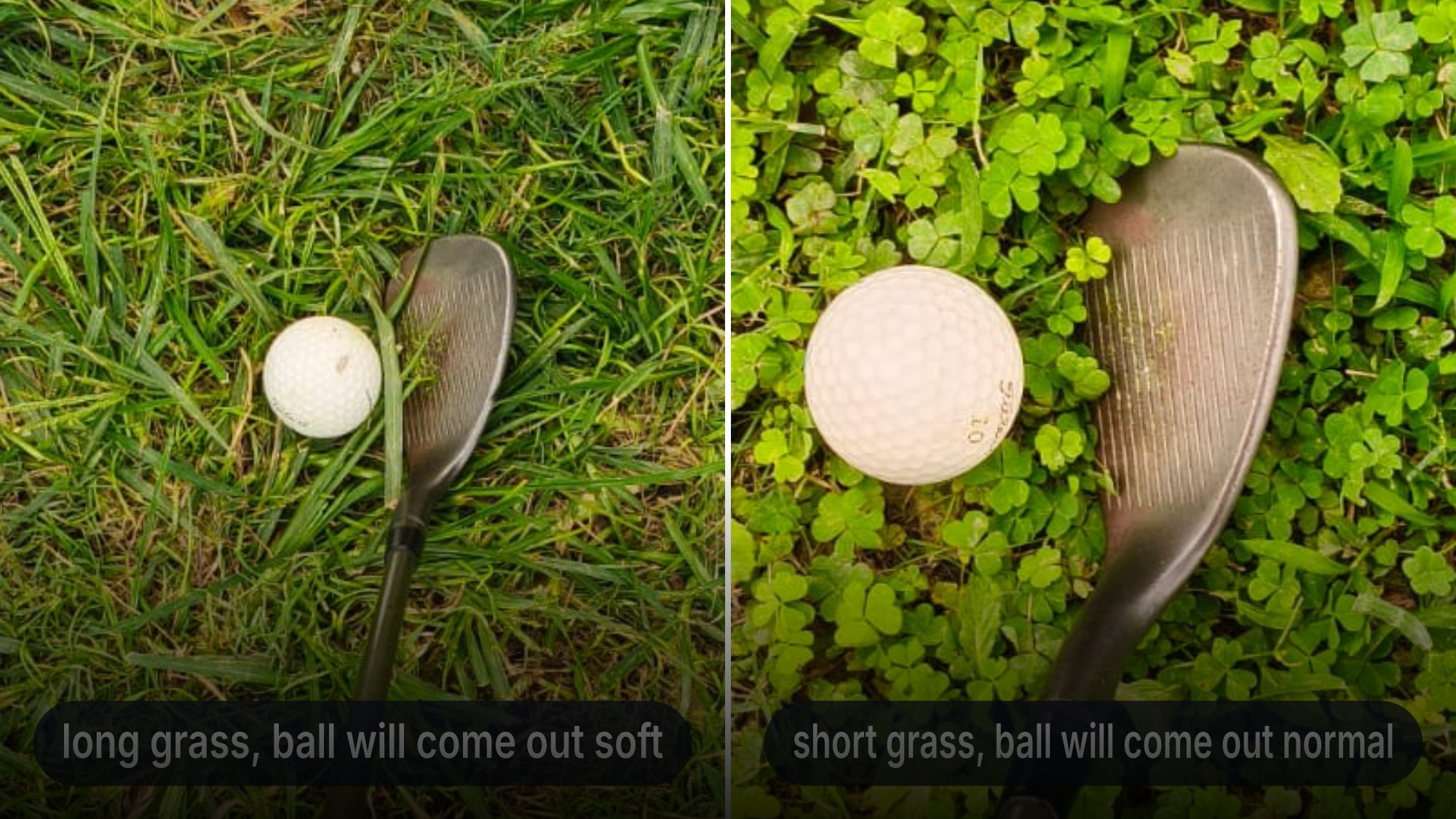
Photo · Golf Daily RoundUp
The 50-to-100-yard band is where breaking-90 golfers separate themselves from breaking-100 golfers. A player who shoots 89 knows their 60-yard wedge number cold, while a player shooting 95 is often guessing between two clubs and hoping for the best.
To build this consistency, spend your practice time at a local pitch-and-putt course or the short-game area. Dropping multiple balls around the green and hitting partial wedge shots allows you to dial in your distances inside 100 yards. Try the ladder drill: hit three balls to 50 yards, three to 70, and three to 90. Measure the dispersion to understand your true carry distances.
Equipment choices also matter in this zone. If you struggle with long irons, replacing your 3-iron, 4-iron, or even 5-iron with a hybrid club provides a much higher margin for error off the turf. Additionally, when playing par 3s, tee the ball low. The sweet spot on an iron is quite low on the clubface; teeing it too high reduces ball speed and causes the ball to fall short into front hazards.
What Is the Best Putting Strategy to Avoid Three-Putts?
Lag putting is the final lever for breaking 90. The objective is not to hole more putts, but to finish your first putt close enough that the second is a routine tap-in. Cutting three-putts from five per round to two is worth three strokes.
To improve your lag putting, adopt a strategy based on the fall line and the clockface, a concept popularized by Mark Broadie. If downhill is at 12 o’clock, understanding how your putt will miss relative to the fall line ensures you leave your second putt in a manageable position, rather than facing a tricky downhill slider.
On the practice green, use the fringe drill to build distance control. Place three balls at 20, 30, and 40 feet. The goal is to stop every putt within a three-foot circle around the hole, ignoring whether the ball actually goes in. This builds the muscle memory required to avoid three-putts under pressure.
How Can Strokes Gained Analysis Improve Your Practice?

AI illustration · Golf Daily RoundUp
While traditional practice involves hitting buckets of drivers, modern golf analytics suggest a more targeted approach. Strokes gained is a statistical method that “measures your performance against a benchmark” by breaking your round into specific areas like driving, approach, short game, and putting.
In my experience building golf scoring and handicap software, I see that players who track their strokes gained data improve much faster than those who rely on feel alone. By tracking your strokes gained over a few rounds, you can identify exactly where you are losing the most strokes. If your data shows you are losing 4.5 strokes per round on approach shots from 100-150 yards, but only losing 1.2 strokes off the tee, your practice plan should immediately shift from the driving range to the approach zones. This data-driven alignment ensures that every hour spent practicing directly translates to lower scores on the course.
Frequently Asked Questions
How to consistently break 90 in golf?
Consistently breaking 90 requires a commitment to course management, specifically eliminating penalty strokes and double bogeys. Focus on hitting fairways off the tee, aiming for the center of greens, and mastering your 50-to-100-yard wedge distances to turn potential blow-up holes into manageable bogeys.
How long does it normally take to break 90 in golf?
The timeline varies based on practice frequency and athletic background, but most dedicated recreational golfers take several years of consistent play and targeted practice to break 90. Utilizing data-driven practice and focusing on short-game consistency accelerates this process significantly.
Is breaking 90 in golf hard?
Breaking 90 is challenging, as it requires a blend of adequate ball-striking, short-game touch, and disciplined course management. However, it is an achievable milestone for most amateurs who commit to eliminating high-error shots like penalty strokes and three-putts.
How many golfers can break 90?
According to the National Golf Foundation, less than 40% of players who regularly track their scores break 90. This means achieving this milestone places you in a distinct minority of dedicated recreational golfers.
Your Break-90 Checklist
- Tee Shots: Prioritize accuracy over distance; a hybrid off the tee is perfectly acceptable if it keeps the ball in the short grass.
- Approach Play: Aim for the middle of the green and take your medicine when in trouble—never attempt a hero shot through a narrow gap in the trees.
- Wedge Control: Know your exact carry distances for 50, 70, and 90 yards to eliminate club-guessing inside 100 yards.
- Lag Putting: Focus entirely on distance control on your first putt to ensure your second putt is left inside a three-foot circle.
Related articles