Tiger Woods: Career, 15 Major Wins and Legacy

Tiger Woods holds 82 PGA Tour victories and 15 major championships, establishing a career defined by unprecedented dominance and historic comebacks. This profile details his journey from a record-setting amateur to a 15-time major champion, examining his defining victories, physical challenges, and the lasting commercial impact he has had on professional golf.
How did Tiger Woods build his early amateur and professional record?
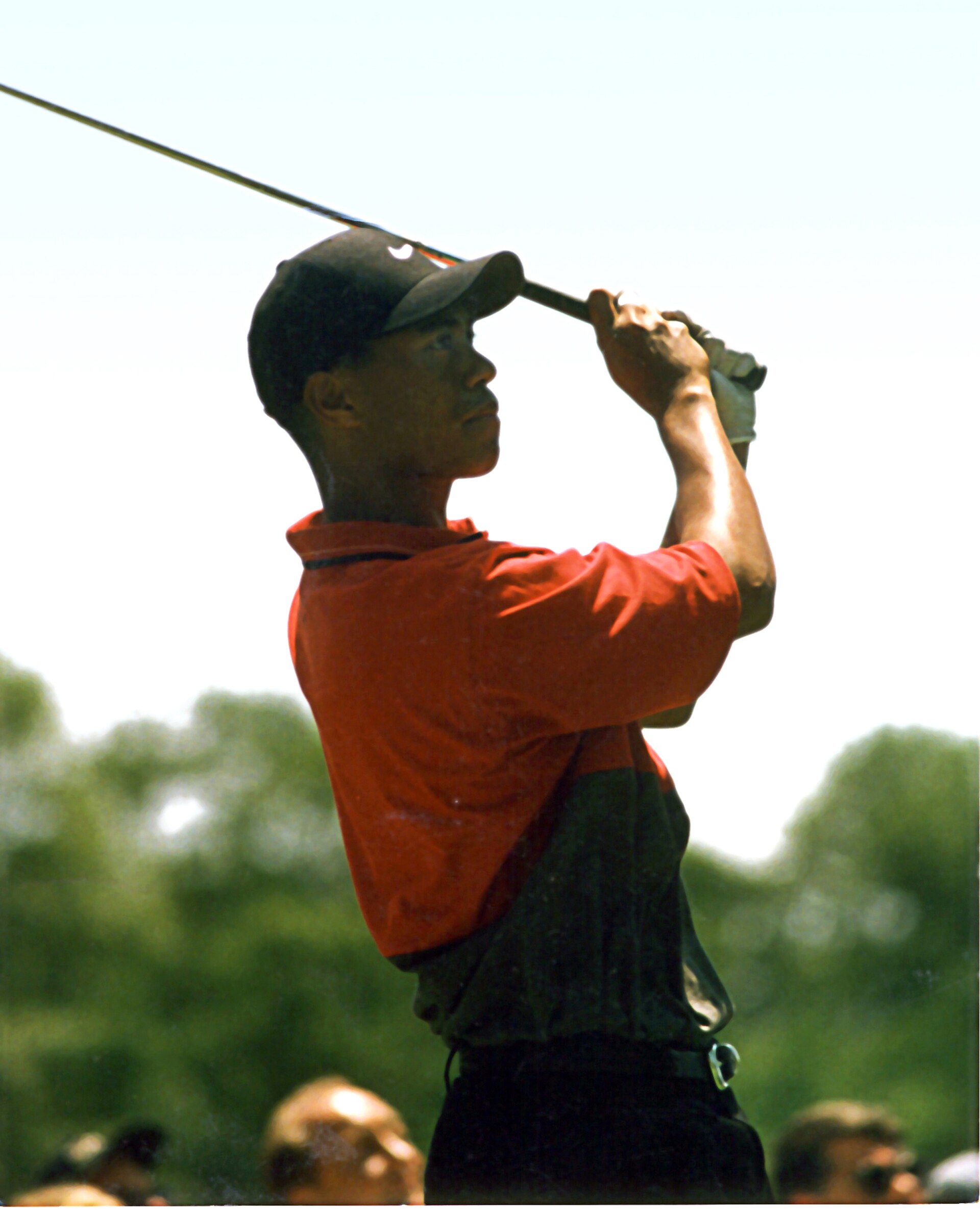
Photo: Tim Hipps, U.S. Army · Public domain · Wikimedia Commons
Tiger Woods won three consecutive U.S. Junior Amateur titles and three U.S. Amateur titles before turning professional in August 1996 at age 20. He immediately transformed professional golf, capturing his first major championship at the 1997 Masters by a record 12 strokes.
His amateur career established a foundation of historic achievements. In 1991, at just 15 years old, he became the “youngest winner of the U.S. Junior Amateur Championship”, a title he successfully defended in 1992 and 1993. He later added three consecutive U.S. Amateur titles to his resume before transitioning to the professional ranks.
Upon turning professional, Woods rapidly ascended the global rankings. He reached the number one spot in the Official World Golf Ranking in June 1997, less than a year after his debut. His victory at the 1997 Masters not only set a new scoring record but also made him the youngest Masters champion ever at 21 years, three months, and 14 days, as well as the first major championship winner of African or Asian heritage. In 1999 he won eight PGA Tour events, the most in a season since Johnny Miller won eight in 1974.
What defines Tiger Woods’ major championship victories and playing style?
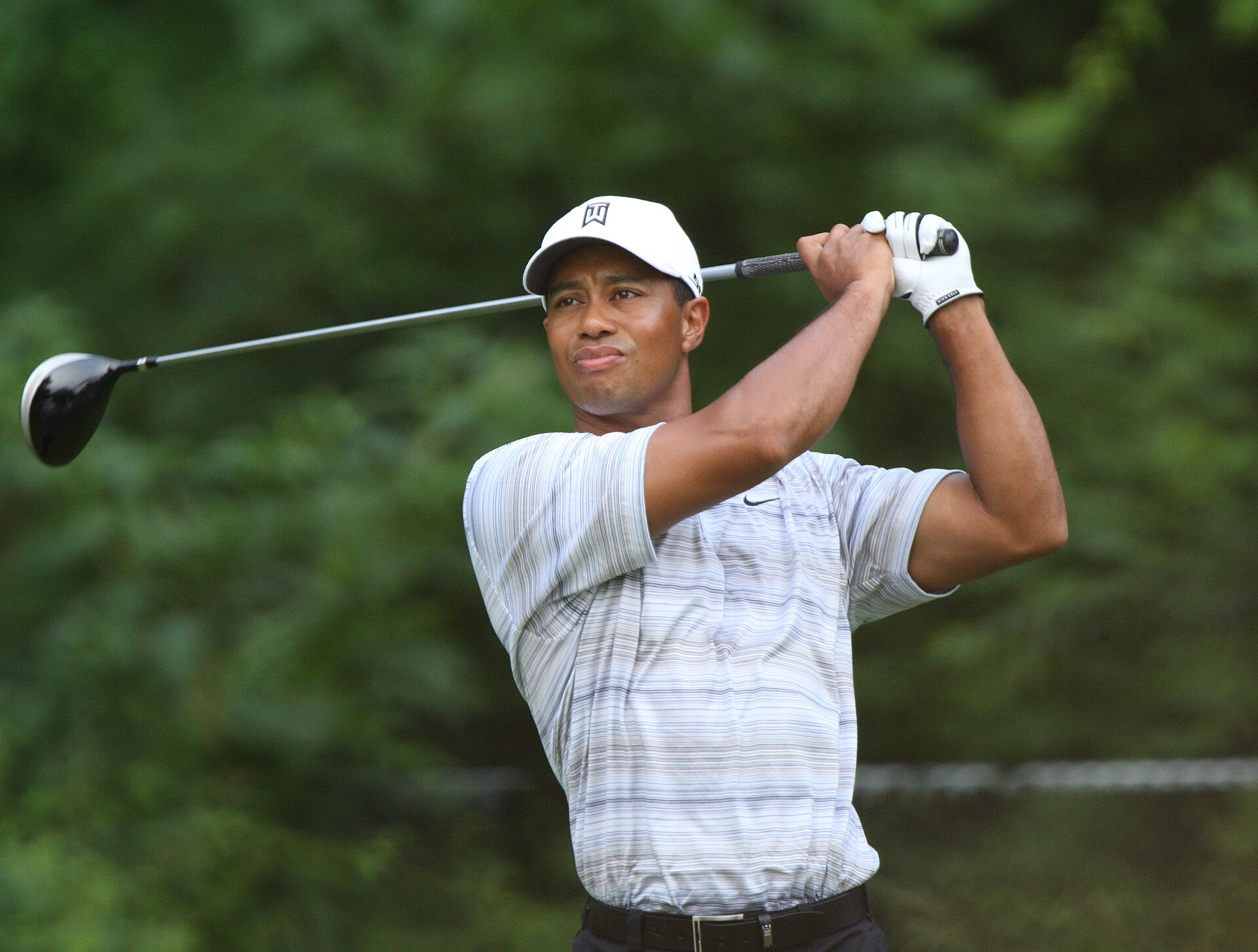
Photo: Keith Allison, CC BY-SA 2.0 · Wikimedia Commons
Tiger Woods secured 15 major championships, including a historic sequence where he held all four professional major titles simultaneously. His playing style combined exceptional power off the tee with precise iron play, fundamentally shifting how the game was approached athletically and strategically.
Woods’ major championship ledger includes five Masters titles, four PGA Championships, three U.S. Opens, and three Open Championships. His 15-stroke victory at the 2000 U.S. Open at Pebble Beach remains the largest winning margin in major history. Later that year, his win at St Andrews made him the youngest player to complete the “Career Grand Slam of professional major championships”. He completed the "Tiger Slam" by winning the 2001 Masters, becoming the only player to hold all four professional major titles at once.
Modern analytics highlight the sheer dominance of his peak performance. During the ShotLink era, his peak season delivered roughly +3.44 strokes gained per round in 2006, the highest recorded since full data collection began.
To contextualize his career achievements, the following table compares his major and tour record against Jack Nicklaus, the previous benchmark for golf excellence:
| Metric | Jack Nicklaus | Tiger Woods |
|---|---|---|
| Majors won | 18 | 15 |
| PGA Tour wins | 73 | 82 |
| Masters | 6 | 5 |
| U.S. Open | 4 | 3 |
| The Open | 3 | 3 |
| PGA Championship | 5 | 4 |
| Major runner-ups | 19 | 7 |
| Major top-10s | 73 | 41 |
| Consecutive cuts in majors | 39 | 39 |
| Consecutive cuts on PGA Tour | 105 | 142 |
| Career Grand Slam age | 26 | 24 |
How did injuries and personal challenges impact his mid-career trajectory?

Photo: Keith Allison, CC BY-SA 2.0 · Wikimedia Commons
Physical ailments, including multiple back and knee surgeries, severely limited the playing schedule of Tiger Woods between 2010 and 2017. These health struggles, combined with personal challenges, caused his world ranking to drop significantly before he began a gradual rehabilitation process.
Woods battled a complex array of physical issues, undergoing multiple knee arthroscopies, microdiscectomies, and treatments for an Achilles tendon injury. The physical toll was compounded by personal challenges, including a highly publicized DUI arrest in May 2017, after which he pleaded guilty to reckless driving and entered a diversion program, with the DUI charge dropped. The cumulative effect of these events and injuries pushed him out of competition for extended periods. By late November 2017, his world ranking had plummeted to 1,199th, a stark contrast to the 683 weeks he would eventually spend at number one.
Despite widespread speculation that his career was over, Woods underwent a final spinal fusion surgery in 2017. This procedure ultimately provided the physical relief necessary to rebuild his swing and return to competitive play, setting the stage for his remarkable resurgence.
Why is the 2018 Tour Championship considered his greatest comeback?

Photo: Michael Stokes, CC BY 2.0 · Wikimedia Commons
Tiger Woods won the 2018 Tour Championship at East Lake after leading or sharing the lead at the end of every round, finishing 11-under-par to beat Billy Horschel by two strokes. This victory marked his 80th PGA Tour win and his first since 2013, completing his return to competition.
The victory at East Lake was a masterclass in consistency. Woods posted rounds of 65-68-65-71, navigating the pressure of a final-round lead with trademark composure. As he walked the 18th fairway, thousands of fans breached the ropes in a scene described as beautiful pandemonium. The emotional weight of the moment was palpable, marking his first PGA Tour victory in five years.
This comeback had a measurable impact on the sport’s commercial health. According to Samford University Sports Analytics, television ratings and attendance fell significantly between 2013 and 2017 while Woods battled injuries. Television viewership dropped 18 percent, and attendance declined 11 percent during that five-year span. His return in 2018, which included 19 total appearances and a Ryder Cup captain’s pick, caused those metrics to skyrocket, proving his unique ability to drive engagement.
"Tiger Woods moves the meter more for his sport than any other athlete." — Samford University Sports Analytics
What is Tiger Woods’ lasting legacy and business impact on golf?

Photo: The White House · Public domain · Wikimedia Commons
Tiger Woods built a legacy extending beyond his 107 worldwide victories into course design, philanthropy, and sports technology. Inducted into the World Golf Hall of Fame in 2022, he fundamentally expanded the global audience for golf while generating nearly $2 billion in career earnings.
Off the course, Woods established TGR, a multibrand enterprise encompassing TGR Design, the TGR Foundation, and TGR Live. His course design portfolio includes Bluejack National, which was selected as Best New Private Course by major golf publications. Through the TGR Foundation, he has supported educational and athletic programs for youth for over two decades.
Financially, Woods is a pioneer in athlete wealth generation. He has earned a PGA Tour-record $121 million in prize money and amassed nearly $2 billion in total pretax earnings through endorsements and business ventures. In 2022, Forbes certified him as a billionaire, making him only the second active athlete to achieve that distinction. His business acumen was further highlighted when he reportedly turned down a "mind-blowingly enormous" offer from the upstart LIV Golf tour, choosing instead to build TMRW Sports, which he co-founded in 2022 with Rory McIlroy and Mike McCarley. Its tech-infused team golf league, TGL, began play in January 2025.
Frequently asked questions
How many majors did Tiger have at 30 years old?
Tiger Woods secured 10 of his 15 major championships before turning 30 years old in December 2005. His early major victories include the 1997 Masters, the 2000 U.S. Open, and the 2001 Masters that completed his historic consecutive major championship sequence.
Is Tiger Woods retired?
Tiger Woods is not officially retired from professional golf, though he plays a limited schedule due to ongoing physical recovery. He continues to compete in select PGA Tour events, hosts the Genesis Invitational, and remains actively involved through his technology-focused golf league.
How many PGA Tour wins does Tiger Woods have?
Tiger Woods holds 82 PGA Tour wins, tying him with Sam Snead for the most victories in tour history. These 82 wins include his 15 major championships and span from his early career successes to his 80th victory at the 2018 Tour Championship.
Reviewed by Shahid Anwer · Editorial standards